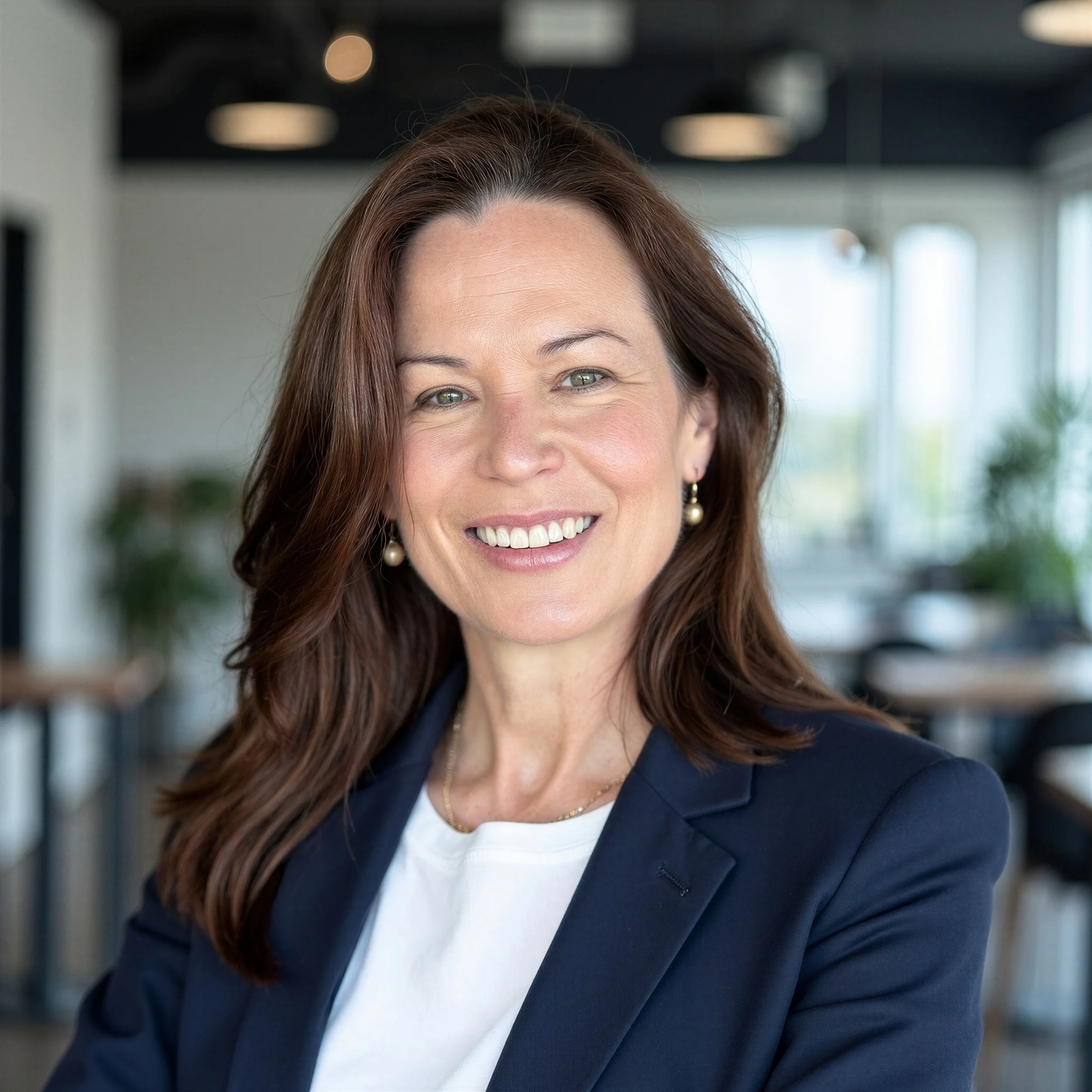
I have just come back from Rio, where we held our first ever Global Upstream Leaders Forum in Brazil. I moderated an illustrious panel of operators with Adriano Roessler Viana, Global Exploration Advisor, Petrobras; Lars Jetlund Hansen, Head of Subsurface Brazil, Equinor; Lucio Prevatti, General Manager, Exploration, Development & Subsurface, Shell Brazil; and Anderson Cavalcante, Vice President, Subsurface Imaging & Country Manager, Viridien.
Before the panel we had just heard Rystad Energy's outlook for Brazilian production, including the sharp decline towards 2030, which made us all sit up a bit straighter and pay attention. But I wanted to start by asking what Brazil has got right. It has, after all, built one of the great deepwater industries in the world with Brazil expected to produce more than 4.2 million barrels a day this year.
Adriano started with people, knowledge of Brazilian geology and a willingness to take exploration risk: “We used to have no fear of risk. So this helped very much to go for frontier areas.” Lars talked about Equinor's long-term commitment and the importance of adapting to Brazil rather than simply bringing the Norwegian model with them. Lucio described Brazil as “blessed with the subsurface”, but also pointed to Petrobras — “a deepwater star operator, one of the best in the world” — ANP and the regulatory stability that allowed international investment to come in.
Anderson talked about people, science and technology, but also what he called “positive nationalism”. I liked that and have seen this collective mission work elsewhere like Angola. There has been something of a national project, almost a national obsession, around Brazilian oil and gas and increasing production.
The more interesting question now is how Brazil sustains it. Lucio made the point that just a 1% increase in recovery factors in its giant fields can be equivalent to a giant discovery elsewhere. Lars talked about increased recovery and what Brazil could learn from a mature province like Norway, particularly around subsea tiebacks, standardisation and bringing costs down.
But that will not be enough. Lucio was clear: “We need to open new frontiers.” Anderson was even more direct: “New discoveries is mandatory.” Brazil needs to continue getting more from the pre-salt, while replenishing reserves and exploring the Equatorial Margin, Amapá ultra-deepwater, Pelotas and beyond.
Brazil Is Competing Globally for Capital
I also wanted to talk about the blockages because otherwise we are not having a particularly useful conversation. We know Brazil has great geology. What could prevent the investment coming? Environmental licensing came up quickly. Lucio's point was not that environmental standards should be lowered, but that “the environmental licence… can be high standards, but it has to be predictable.” When companies are committing rigs 18 to 24 months in advance and making investments over 15 or 20 years, that matters.
He then made what I thought was one of the most important points of the discussion: “The key element for Brazil is how Brazil maintains competitiveness compared to other investment areas.”
I couldn't agree more. This is a global picture. Countries are catching up, offering stable fiscal regimes and competing hard for the same investment. No company has to invest in one country or basin. Exploration teams are looking globally at the geology, the terms, the regulatory environment and whether they can actually get projects done. Brazil has fantastic geology, but capital has choices.
We then widened the conversation. I asked how this could become a Latin American success story rather than just a Brazilian one. Adriano talked about opportunities across Guyana, Suriname, Venezuela, Colombia, Uruguay, Argentina and the Pacific margin. His view was that “there is huge opportunities everywhere”, but with an important qualification: “We need to have stability to invest.”
The Atlantic Mirror Effect
One of my favourite parts of the discussion came when Lucio talked about how discoveries on the African side of the Atlantic make explorers go back to Brazilian data and look again: “Every time that there is a discovery, we all get excited and we go back and look at our books again.”
I said it sounded a bit like Indiana Jones, following the clues from Namibia and Africa. Adriano had a better description: the “mirror effect”. We spend so much of our time at Frontier working across Africa that we naturally see these connections. A discovery in Namibia can send an exploration team back to old data in Brazil, change a geological model and lead to new 3D. Exploration success on one side of the Atlantic can change the way people think about the other.
Tomorrow’s Frontiers Will Be Different
Technology will be a big part of what happens next. Anderson reminded us that ten years ago many people did not believe 4D seismic in the pre-salt carbonates would be possible. Today it is a reality. He described the challenge as “how to do more and better with less”. We cannot necessarily explore tomorrow's frontiers in exactly the same way as we explored those of the past.
Lars made a good counterpoint. Brazil has already industrialised deepwater development and built enormous subsea capability. New frontiers do not have to start at the beginning; they can “jump in on the learning curve”. Adriano also reminded us that when Brazil was first looking at drilling through around 2,000 metres of salt, people said it was impossible. Who knows what will be possible in the future?
From Competition to Collaboration
Collaboration also came through strongly. Lucio said the industry is “evolving from a world of competition to collaboration”. We had heard exactly the same thing in meetings the day before. There needs to be more collaboration between operators, the service sector, government and regulators if Brazil wants to move faster and open the next generation of opportunities.
The Opportunity Is Now
I ended by asking where everyone hoped Brazil would be in 2035. Anderson hoped technology would allow Brazil to sustain production and “do more, even better”. Lucio wanted continued bid rounds, dialogue between government and industry and continued exploration of new frontiers. Lars said, “I not only hope, but I really believe that Brazil will still produce at very high production levels.”
Adriano summed it up in one word: “Optimistic.” You have to be an optimist to be an explorer, and I came away optimistic too. Brazil has the resource, the people, technology and an extraordinary deepwater track record. But it also has competition.
The opportunity is much bigger than Brazil. South America can play a much bigger part in supplying increasing global demand for hydrocarbons. Brazil, Argentina, Uruguay, Guyana, Suriname and others all have opportunities at a time when companies are actively looking for the next resource base.
As I said at the end of our discussion in Rio, “the opportunity is now. Right now.”
Long live the pre-salt — and onto new frontiers.
This captured the mood.
Special thanks to our sponsor Viridien for making this possible, and to Luiz Braga, Fernanda Clara Hermes, Nadia Stanzig, Stephanie Senderowitz, Fernando Garcia, Marina Abelha, Raphael Faucz, Rystad Energy Tom Darin Liskey and all the great people of the industry that attended for your contributions and warm welcome.